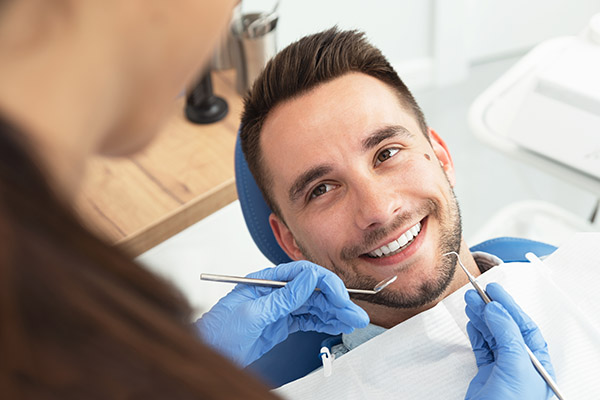
 Dental implants, while an excellent tooth replacement option, require a strenuous process and months-long commitment. The dentist requires each patient to undergo a physical examination before approval. In the event of a denial, they may recommend additional procedures to help the qualify if the reason results from infection or degeneration in the gum tissue or jawbone. The dentist may recommend one or multiple of the following four services.
1. Scaling and root planing
For those denied candidacy due to infection, specifically gum disease, a scaling and root planing procedure may help remove the threat. Also called a professional deep cleaning, this procedure involves scraping all traces of plaque and tartar (hardened plaque) from above and below the gum line. The dentist also smooths rough patches left behind on tooth roots, removing bacteria as they go. Additionally, the dentist will prescribe an antibiotic to remove the infection from the inner structures of the gums, including the area with the missing tooth or teeth.
2. Flap surgery
While a scaling and root planing procedure is ideal for those with gingivitis, early stages of gum disease, more severe cases, such as periodontitis, may require flap surgery. Also called pocket reduction surgery, this procedure involves the dentist lifting the gums to expose tooth roots and sometimes the jawbone to remove trapped or hidden bacteria, plaque, and tartar. Antibiotics may also be necessary.
3. Gum grafting
Gum degeneration or recession is a common side effect of tooth loss. However, sufficient amounts are needed to cover the jawbone and the abutment base, a portion of the dental implant. Therefore, the dentist will consider a gum graft, which involves harvesting tissue from elsewhere in the body to fill the receding areas. Typically, the dentist will use tissue from other areas in the mouth, such as the palate (roof of the mouth). Once the healthy tissue is sutured in place, the two tissues will join together, becoming one.
4. Bone grafting
Jawbone degeneration is another common side effect of tooth loss. With no structure to stimulate the area, the jawbone will begin to recede. However, sufficient volume is needed to support the entire dental implant. Therefore, the dentist will recommend one of three types of bone grafts:
- Ridge augmentation. Increases the width of a thin jawbone
- Sinus lift. When the maxillary sinus floor drops, a synthetic material that simulates bone must be placed underneath it
- Socket preservation. The use of a synthetic bone material placed inside a socket immediately following an extraction to prevent it from caving in
Note that regardless of the type of graft chosen, the material must fully heal before the dental implant process can begin.
Improve dental implant approval odds in the Totowa area
Dental implants are one of the most effective and durable ways to restore your smile. However, the candidacy process is crucial to ensure that you are physically capable of undergoing the somewhat strenuous dental implant process. Therefore, to determine whether you are a good fit or learn how to become one, contact our office for a consultation.
Request an appointment or call Four Ever Smile Dental Spa at 973-890-0600 for an appointment in our Totowa office.
Related Posts
Dental implants offer tooth replacement that most closely resembles natural teeth. Due to their aesthetic and functional benefits, they are quickly becoming one of the leading options for tooth replacement. Understanding the basics of the process, including requirements for candidacy, can help patients decide if this is the right option for them.A dental implant is…
Dental implants are one of the most durable and attractive ways to replace missing teeth. They are a favorite among dental professionals due to their ability to address every issue that results from missing teeth. Learning more about degeneration and dental implants can help narrow down your tooth replacement options list.When a tooth is lost,…
Dental implants are a permanent replacement option for those missing one or several teeth. They are highly sought after due to their ability to address all the side effects of tooth loss, from restoring appearance and function to preventing shifting and degeneration. Learning more about dental implants can help determine whether this option is appropriate.According…